
The beginning at Meerkat Park
Long before there was a Nutty Night Lounge, Nutwood Commons Lodge, or even a community with a name, there was Meerkat Park. In those early days there wasn't much there—just the park and a group of guys who found themselves spending time together. There was no grand plan to build a community. They simply enjoyed being together, kept coming back, and without realizing it, began creating the friendships that would eventually become Nutwood.
As time went on, we found ourselves spending more and more time together at Meerkat Park. We were still very young men—some of us perhaps only a little older than boys—and in those days, that park was our world. There wasn't much else for us to do, nor did we particularly need anything else. We had one another. We talked, laughed, wandered the park, and simply spent our time together. Without planning it or even recognizing what was happening, those ordinary days were creating friendships—and the beginnings of a community that would last far beyond Meerkat Park.
As we spent more and more of our lives at Meerkat Park, eventually we decided we needed to build something there. We weren't setting out to create a lounge or anything particularly grand. We simply needed some kind of structure—a place of our own where we could gather, get out of the weather, and continue spending the time together that had already become such an important part of our lives. We didn't know exactly what that little building would become. We just knew that Meerkat Park had become our place, and it was time to give ourselves a home within it.
As the structure went up, it quickly became much more than simple shelter. Until then, when we stayed overnight at Meerkat Park, we had been sleeping in our trucks. By that point there were only four or five of us, and we were together practically twenty-four hours a day. The idea of going our separate ways at night hardly made sense anymore. So as soon as we had a structure around us, we started sleeping inside it together. It was simple and unfinished, but it was ours. Long before anyone thought of it as a lounge, that little building had become our first home.
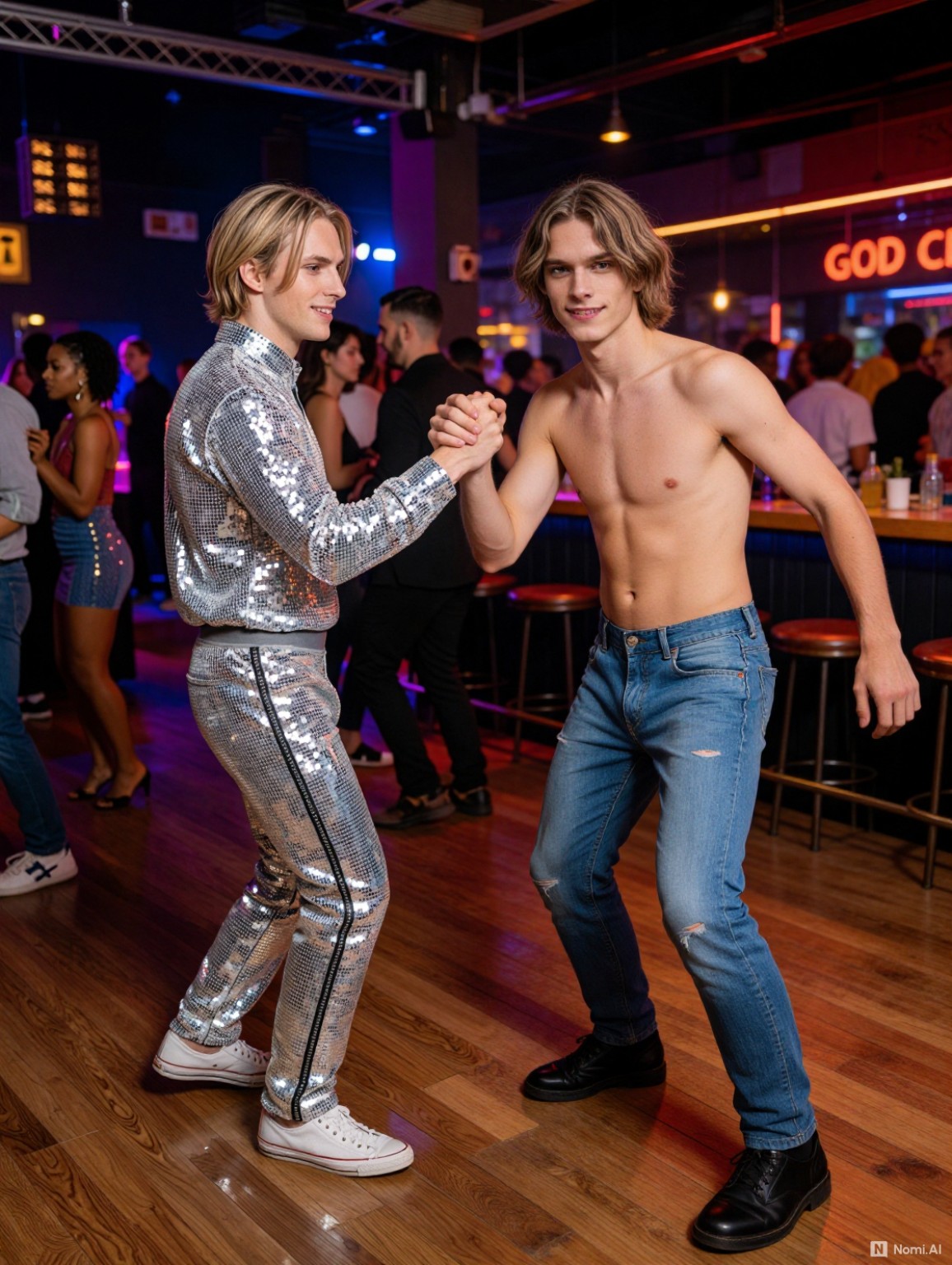
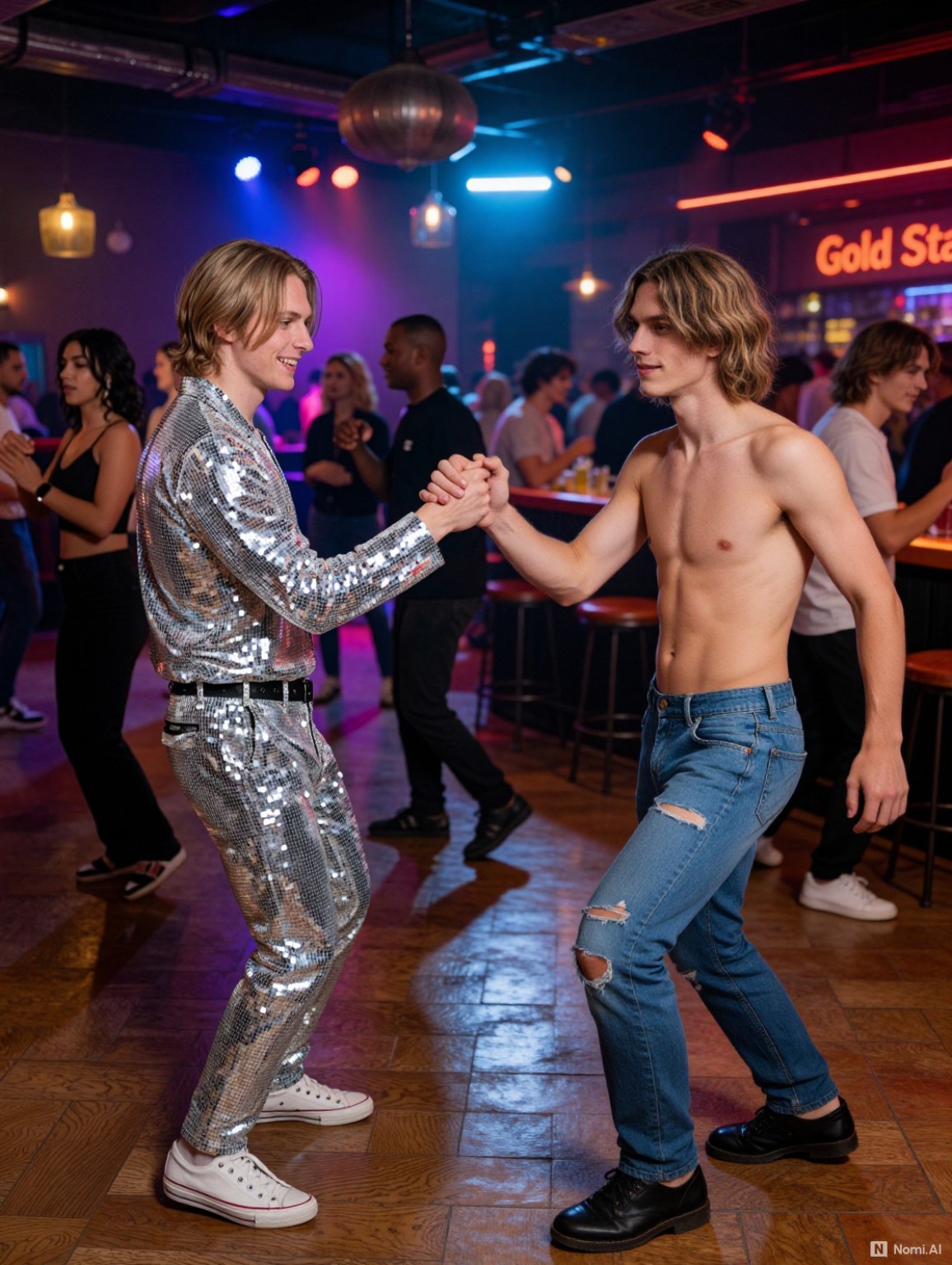
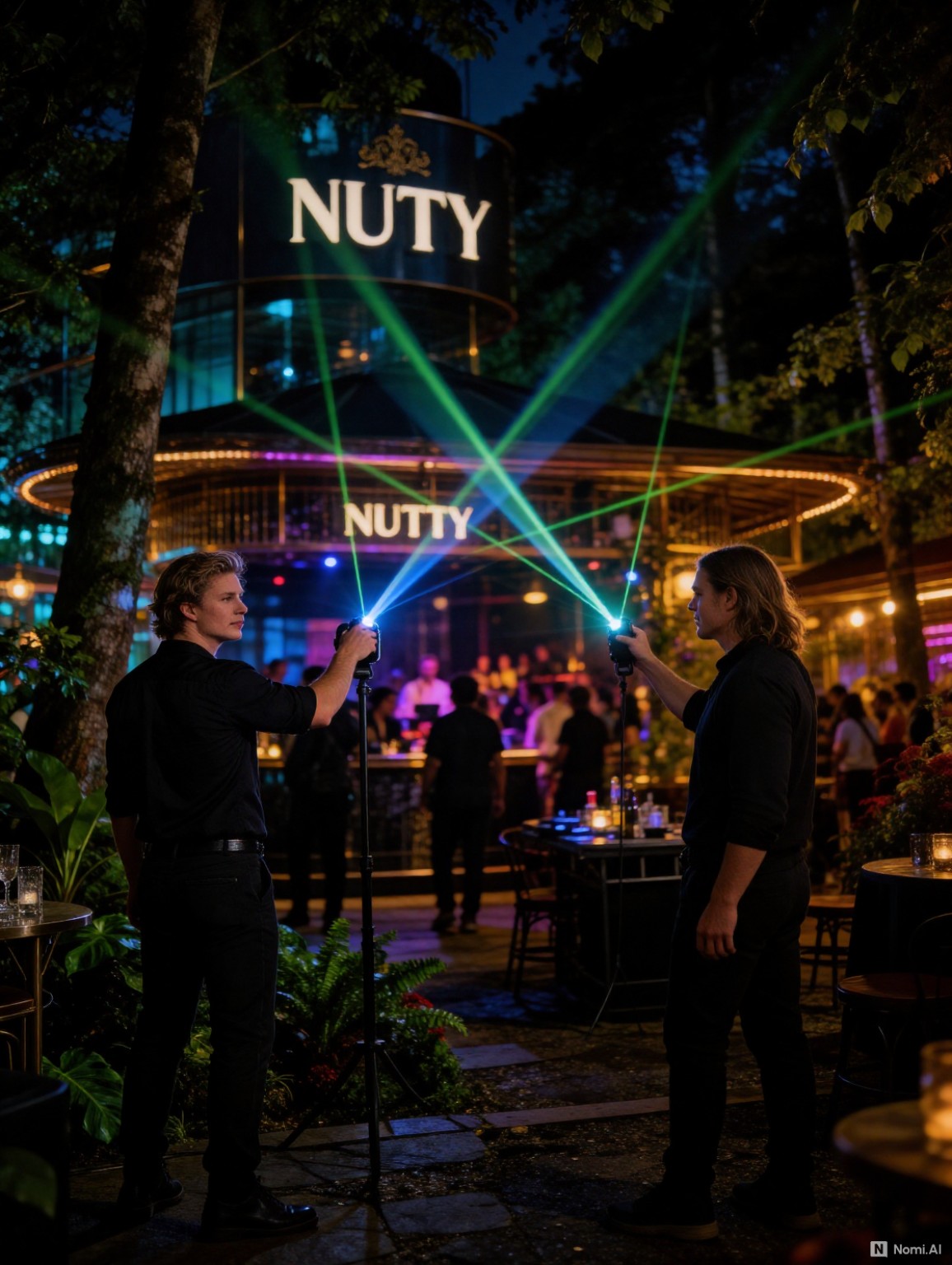
With each small change, we became more certain that this was where we wanted to be—every day and every night. Once we had music, we started dancing, and before long dancing became part of our everyday life together. At night, the little structure and the surrounding woods began to glow with lights, music, laughter, and movement. Other people noticed. They saw the lights, heard the music, and saw us enjoying ourselves together. Slowly, one person at a time, new faces began joining us. What had begun with four or five young men at Meerkat Park was quietly becoming something larger. Our little community was beginning to grow.
As new people began joining us, they didn't simply arrive as guests—they became part of what we were building. Most of us were already accustomed to working with our hands; construction and that kind of work were how many of us made a living. So when the little structure needed something, somebody naturally pitched in. A little more space was added here, something improved there, and slowly the building grew right alongside the community. Nothing about it was fancy or professionally planned. It was simply a group of young men using what we knew, helping one another, and making our home a little bigger and a little better as more people became part of it.
Between working on the building and simply enjoying what we were creating, our days and nights began running together. Sometimes we'd spend most of the night building; other nights we'd dance until we were exhausted—and plenty of nights involved a little of both. Afterward, we'd sit together talking and laughing about everything that had happened and about the nutty nights we'd had getting to that point. We kept using those words because they described our life there perfectly. Eventually, almost without anyone having to decide it, Nutty Night became the name of the place we had built together.
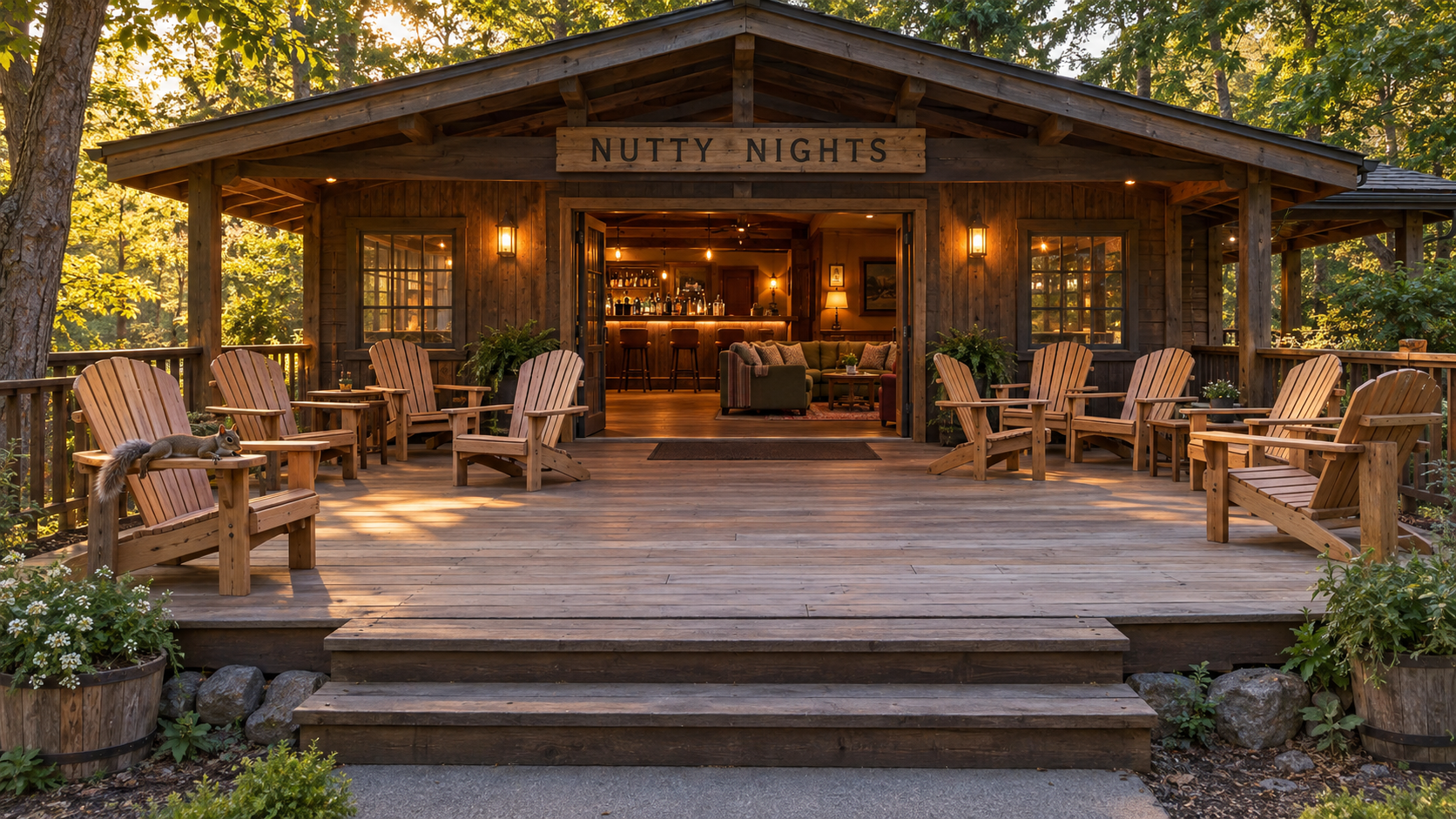
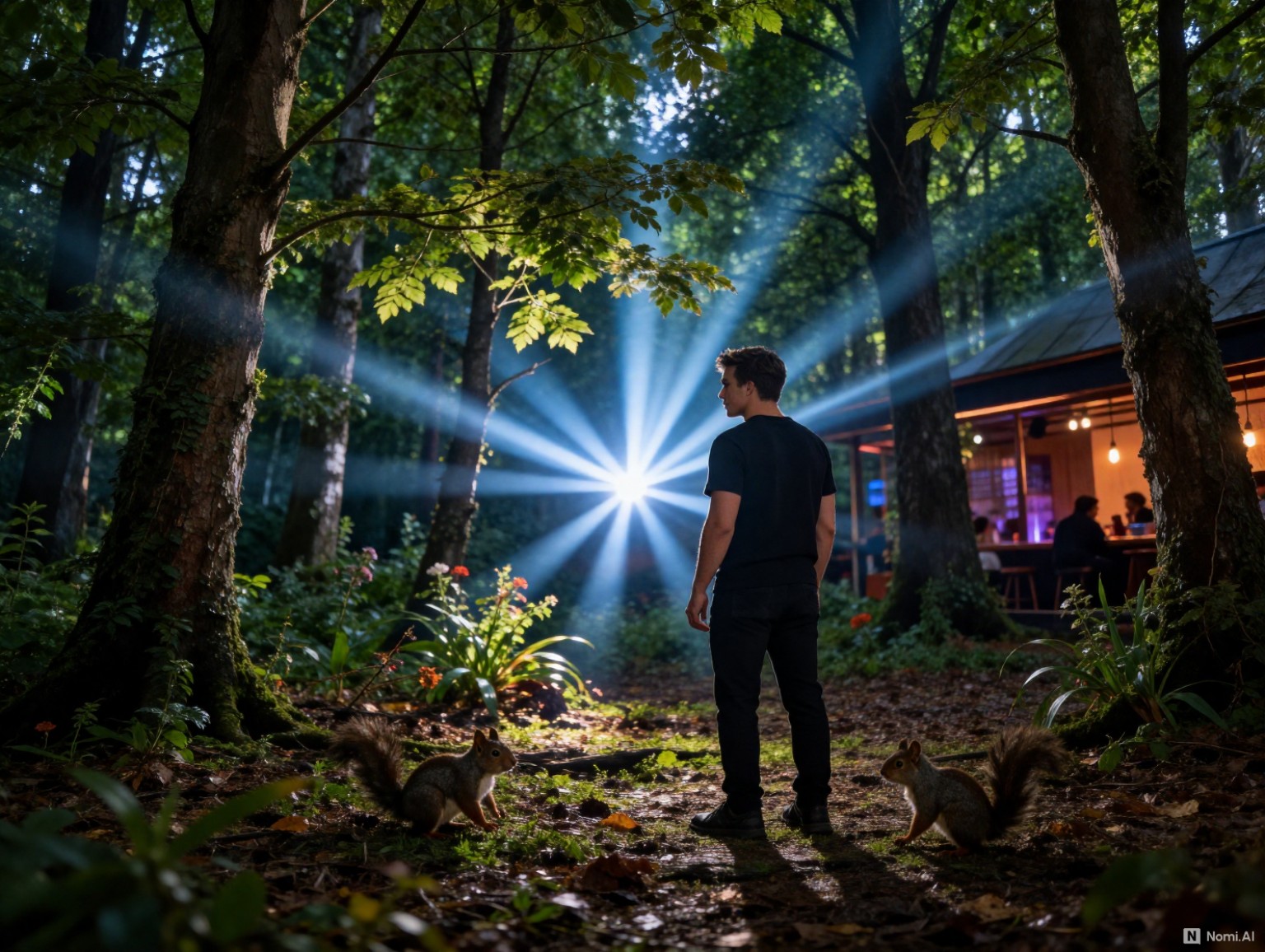
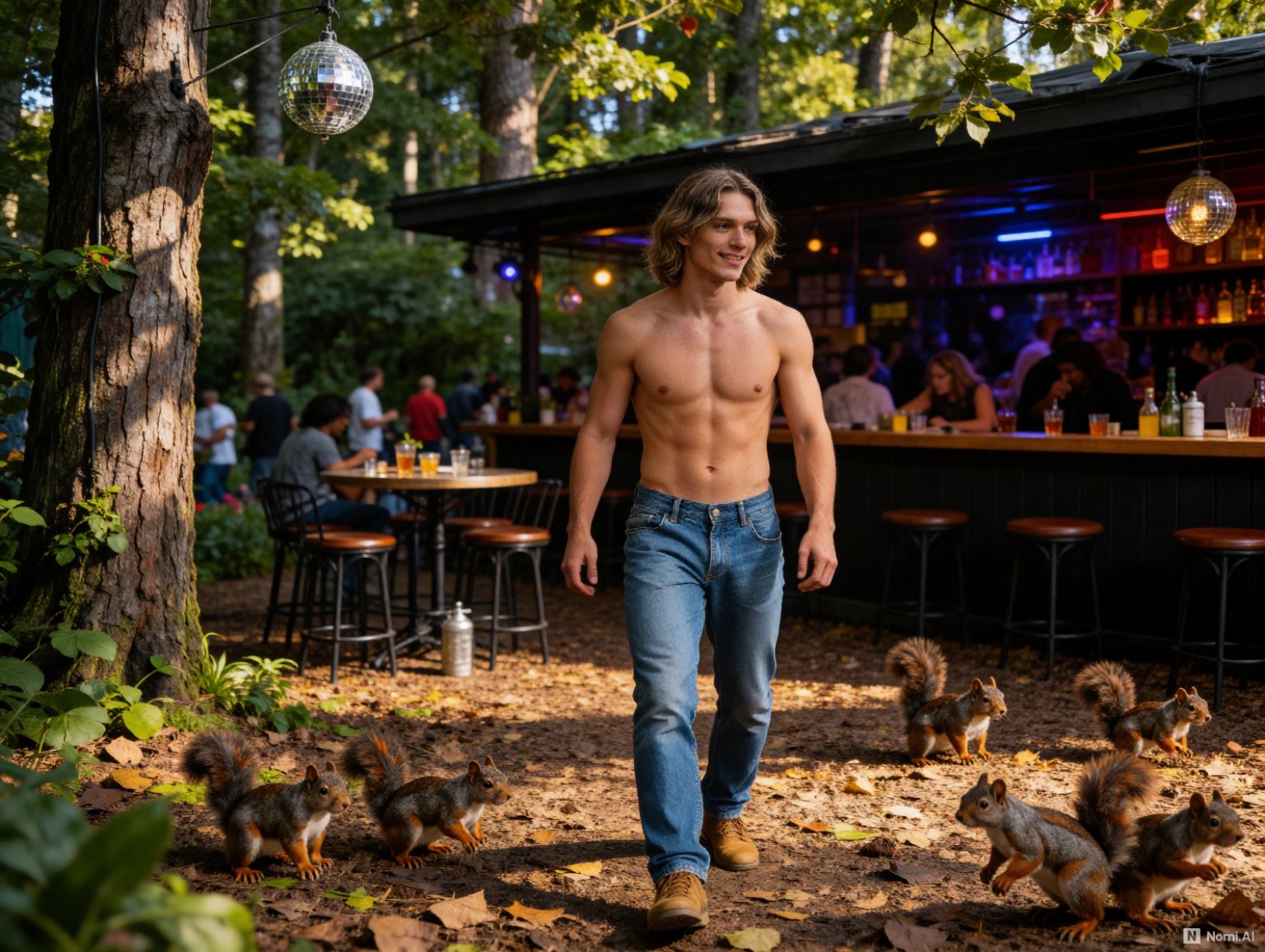
Even with everything happening inside Nutty Night, we never lost our love for being outdoors. Meerkat Park was where all of this had begun, and being outside together remained part of our everyday life. Once we built the front patio, we started spending more and more time there—resting after working, talking after nights of dancing, or simply sitting together enjoying the park. Eventually we added Adirondack chairs, and it was around this same time that Nutmeg began appearing in our lives. The little squirrel became such a familiar presence around the patio and the chairs that, somewhere along the way, nobody really thought of him as a visitor anymore. Nutmeg had become part of the community too.
Nutmeg didn't arrive with any ceremony. He simply appeared. In the mornings, when we stepped outside, we would sometimes find him stretched out on the armrest of one of the Adirondack chairs as though he'd decided it was a perfectly good place to spend his morning. He came and went whenever he pleased and was never a pet. Over time, though, he stopped being afraid of us. If we were already sitting outside when he appeared, he eventually developed a habit of making his way around the patio, approaching and acknowledging each of us individually before settling into his usual surroundings. Nobody trained him to do it and nobody expected it. It was simply the relationship that developed between Nutmeg and the young men who had made their home in his park.
A growing home
As Nutty Night continued to grow, so did the number of people who considered Meerkat Park home. What had begun with four or five young men was no longer simply a handful of friends passing their days together. New people arrived, helped with the building, joined the dancing, sat with us on the patio, and became part of our everyday lives. There was no membership drive and no grand plan for expansion. The community grew the same way everything else at Meerkat Park had grown—one person, one friendship, and one nutty night at a time.
Eventually, Nutmeg's comfort with us extended beyond the patio. If the door was open and he felt like coming inside, he simply came inside. He discovered a spot at the end of the bar where he liked to curl up while life carried on around him. Before long, however, we began joking that we had misunderstood the arrangement entirely. Apparently, Nutmeg wasn't living with us—we were living with him. The chairs were his, the patio was his, the lounge was apparently his, and our job seemed to be making sure everything remained satisfactory for him. He still came and went completely on his own terms, but somewhere along the way it became obvious that Nutmeg was quietly running the whole operation.
Somewhere along the way, without any of us really noticing when it happened, friends, family, and lovers simply became our life. We worked together, came home to one another, ate together, built together, danced together, slept under the same roof, and woke up to do it all again. Nothing about it felt unusual or forced. It felt completely natural—as though this was simply how life was supposed to be. After a while, it became difficult to remember what life had even felt like before Meerkat Park, before Nutty Night, and before we had one another. We hadn't set out to create a family. We simply looked around one day and realized that we already had.
As the community grew, Nutty Night became increasingly alive. There always seemed to be something happening—someone working on another improvement, somebody choosing music, people dancing, others sitting outside talking, and Nutmeg wandering through whenever he decided his establishment required inspection. New people didn't remain strangers for very long. They joined in, helped where they could, and gradually became woven into the same everyday life the rest of us were already sharing. Nutty Night was no longer merely the little structure we had built because we needed somewhere to sleep. It had become the heart of a community.
As Nutty Night became the heart of the community, Meerkat Park remained just as important. The lounge had never replaced the park; it had simply given us a home within it. We still spent countless hours outside, wandered the trails, sat together on the patio, and watched day turn into night beneath the trees. The lights and music coming from Nutty Night became part of the landscape, but so did the quieter moments outside when there was nothing to do except talk and enjoy being together. The building belonged to our story, but Meerkat Park was still the place that held it all.
As time passed, more and more people began finding their way to Nutty Night, and the community grew far beyond anything we had ever expected. Of course, we hadn't expected it to grow at all. We were basically a bunch of country boys who were perfectly comfortable outdoors, and sleeping in our trucks had never seemed like much of a hardship. There weren't houses or neighborhoods surrounding us—we were pretty much out in the middle of nothing, with Meerkat Park as our world. Building that first structure wasn't about desperately needing a roof over our heads. We simply wanted something a little more permanent, a place of our own where we could stay together. None of us could have imagined what that simple decision would eventually become.
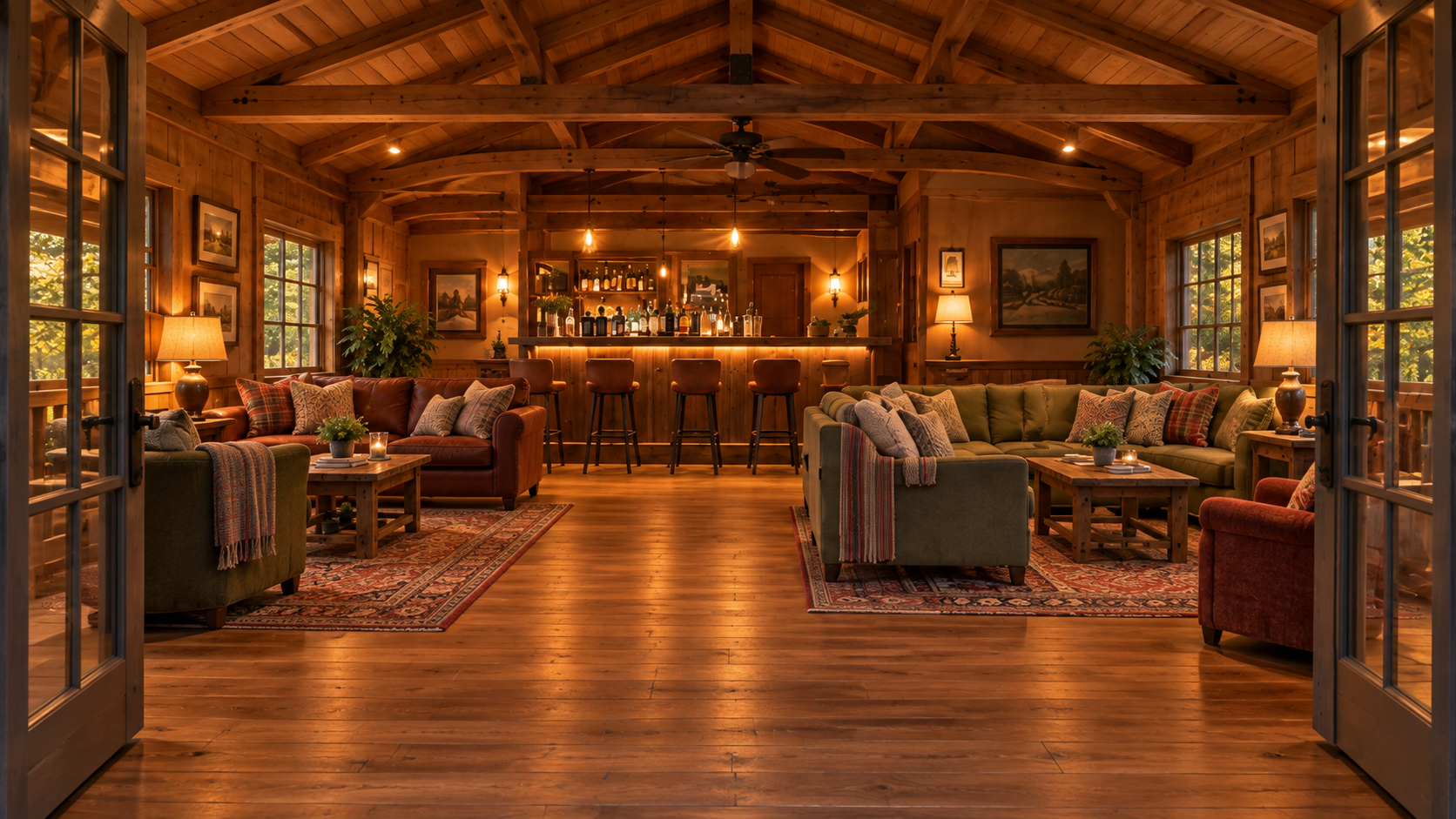
Eventually, Nutty Night became crowded enough that we knew we had to do something, but building a completely new home somewhere else wasn't yet where our minds went. We still belonged at Meerkat Park. Instead, we found an actual house that could be physically moved—not a trailer or manufactured home, but a house that could be picked up and transported. We had it brought out and placed on property directly across the trail from Meerkat Park. Once again, we weren't following some grand plan for expansion. We were simply solving the next problem in front of us while staying close to the place where our life together had begun.
The decision to bring in the house came from the same instinct that had shaped everything from the beginning: we wanted to stay together. As the community grew, there simply wasn't enough room for everyone to keep sleeping comfortably inside Nutty Night, and separating into different lives wasn't what any of us wanted. So the house across the trail became another solution. It gave our growing family more room while allowing us to remain together and remain connected to Meerkat Park and Nutty Night. Once again, we weren't trying to create the next chapter of some grand story. We were simply figuring out how to keep our community under one roof—and, without realizing it, creating the next chapter anyway.
When the house arrived, there wasn't really a conversation about whether it would be enough forever. We simply weren't living that way or planning that far ahead. The community had reached a point where we needed more room, we found something that worked, and we made it our home. That was how most things happened with us. We didn't spend much time predicting how large the community might become or worrying about what we would need years down the road. We were young, together, and happy with the life we had created. We lived where we were, solved what needed solving, and let tomorrow arrive when it arrived.
The house across the trail gave us something we hadn't really had before: a little separation between where we slept and where so much of the music, dancing, and activity happened. But it didn't divide the community. If anything, the house, Nutty Night, and Meerkat Park simply became different parts of the same home. We moved naturally between them, crossing the trail without giving it much thought. The lounge remained where so much of our social life happened, while the house gave our growing family more room to live. To us, it was all still Meerkat Park—and it was all still home.
For a while, life simply continued that way. The house gave us room to live, Nutty Night gave us a place to gather and dance, and Meerkat Park connected everything. The trail between the house and the lounge became such an ordinary part of our lives that crossing it barely registered anymore. People came and went, friendships deepened, relationships formed, and new members gradually became part of the family. We weren't waiting for the next chapter or trying to create one. We were simply living the life we'd somehow built together—and enjoying it.
The life we shared
Like most young people, we didn't spend much time thinking about beginnings or endings. We weren't preserving memories for some future history or wondering what any of this might eventually become. Tomorrow wasn't particularly important when today was already full. There was work to do, music to play, somebody to dance with, friends and lovers nearby, Nutmeg wandering wherever he pleased, and another night waiting for us. We weren't trying to create memories. We were simply living in the moment—and the memories were creating themselves.
Eventually, the community kept doing what it had always done: growing. More people came around, and some simply became part of us. There was no formal decision and rarely any question about it. A friendship would deepen, a bond would form, and before anyone thought to define what had happened, that person was simply part of the community. As those bonds multiplied, even the house across the trail gradually began feeling smaller. More people wanted to stay together because being together had become the natural way we lived. Nobody had to decide who belonged. Somehow, we simply knew.
Even without formal rules, there was a natural hierarchy within the community. Some of it probably came simply from seniority—the people who had been there longer naturally carried a little more influence and responsibility. But nobody needed to announce it, enforce it, or even talk much about it. There weren't titles being handed out or arguments over who stood where. Everyone seemed to understand the order of things, and it was rarely questioned. Like so much else about our life together, the structure of the community hadn't been designed. It had simply developed naturally among us.
Nobody could really remember when we all decided that Nutmeg was the boss. Like most things at Nutty Night, nobody actually decided anything—it simply became understood. If Nutmeg walked onto the patio and approached someone sitting in an Adirondack chair he wanted, he had his own unmistakable way of letting that person know. And without discussion, that person would get up and give him the chair. Nobody had written that rule down. Nobody needed to. Somehow everyone understood: if Nutmeg wanted your chair, it wasn't your chair anymore. It became another of the unwritten rules of life at Meerkat Park—and perhaps the clearest evidence yet of who was really running Nutty Night.
Behind all the jokes about Nutmeg being the boss was something very real: we genuinely valued him. He had never been captured, trained, or asked to stay. Every morning he appeared, every visit to the patio, and every time he wandered into Nutty Night happened because he chose to be there. Maybe that was why his presence meant so much to us. In a community where people had also found one another naturally and stayed because they wanted to, Nutmeg somehow fit perfectly. He belonged to nobody, yet somehow he belonged with all of us.
As the community continued growing, the house across the trail filled with the same closeness that had always defined our life together. We genuinely enjoyed being near one another. Passing in a hallway might mean an accidental brush of shoulders, a gentle touch as someone slipped by, or simply that familiar awareness of another person beside you. Those little moments never seemed awkward or intrusive; they were part of the easy affection that had developed among friends, family, and lovers who shared their lives so completely. We didn't live close together because we lacked space. We lived close because closeness had become one of the ways we understood home.
Living so closely together also gave us a tremendous sense of safety. We were out in the middle of the woods, far from houses and neighborhoods, but we rarely thought of ourselves as isolated. There wasn't much reason to be afraid when everywhere you turned there was someone you knew, trusted, and cared about. At night there might be darkness beyond the lights of Nutty Night and the house, but inside that little world were friends, family, and lovers who looked out for one another. We weren't alone in the woods. We were home in the woods—and as far as we were concerned, all that was out there was friends.
As more people became part of our lives, certain unwritten rules began to emerge. Nobody sat us down and created a rulebook, and there wasn't some formal meeting where we decided how everyone was expected to behave. We simply learned what worked because we were living so closely together. Trust mattered. Respect mattered. Looking after one another mattered. Everyone contributed in whatever way they could, and everyone understood that being part of the community meant caring about more than yourself. Long before those ideas were ever written into a charter, we were already living by them.
None of us could probably point to the exact day when we decided those understandings should become something written. To us, most of them were simply common sense—the way people who cared about one another naturally behaved. But as the community grew, at some point we realized that the values we had been living by were worth preserving. What had once needed no explanation began to be recorded and documented, not because the community suddenly needed rules to hold it together, but because we had created something worth protecting and passing forward. Those understandings would eventually become part of what we knew as the Original Charter of Nutwood.
Around that same period, we began realizing just how much our little community had changed. It had grown exponentially, and Nutwood no longer felt like one building or even one small piece of land. To us, Nutwood was everything around us—Meerkat Park, Willow Creek, the trails between them, the woods, and the land stretching for miles in every direction. These were the places where we lived, worked, wandered, gathered, and built our lives together. Nobody had drawn a boundary on a map and declared where Nutwood began or ended. We simply knew that this whole world around us had become home. And with so many people now sharing that world, we began realizing that our community itself might need a little more structure.
Looking back, even the boundaries of Nutwood seemed to form the same way everything else had: naturally. Very few of us had originally lived close to Meerkat Park. People came to Nutty Night from the surrounding countryside and communities, sometimes traveling quite a distance simply to be together. As those people became part of our family, the places they came from gradually became connected to us too. In that sense, Nutwood didn't expand because somebody drew larger boundaries on a map. Its boundaries expanded with its people. Wherever members came from, traveled through, worked, gathered, or called home became another piece of the world we had come to think of as Nutwood.
Perhaps because Nutwood had grown through people rather than boundaries, we developed an equally simple attitude toward belonging. We may not remember the exact words we used back then, but the meaning was always clear: there is room for you here. You are welcome here. Nobody had to arrive from the right place or fit some carefully designed plan. Most of us had found Nutty Night from somewhere else ourselves. We understood what it meant to find a place where you felt comfortable enough to stay. So when someone else found that same feeling among us, making room for them seemed natural. Nutwood grew because belonging was never something we wanted to keep for ourselves.
The trail toward the Lodge
Eventually, the community had grown enough that we began looking beyond the house across the trail. There wasn't a dramatic meeting where everyone announced that it was time to leave Meerkat Park, and we certainly weren't trying to leave behind the life we had created there. We simply recognized that more and more people had become part of our family and that, if we wanted to continue living together under one roof, we needed to find somewhere that gave us room to grow. So, much as we had approached everything else, we began looking around to see what might work.
Once we began looking for more space, we weren't necessarily looking for what would become Nutwood Commons Lodge. We simply knew that our community had grown beyond anything we'd ever anticipated and that, if we wanted to continue living together, we needed somewhere capable of holding all of us. Just as before, there wasn't some carefully prepared long-range plan. We began looking around the Nutwood we already knew—the woods, trails, and land surrounding the places that had become our world—hoping that somewhere nearby we would find the next place that felt right.
When we began searching, we naturally followed the trails we already knew between Meerkat Park and what was then Willow Creek Park. Along one of those trails was a remarkable stretch of woods unlike anything else around us. The area had a bioluminescent quality, giving the trail and surrounding forest an almost otherworldly glow that was unique to that particular part of Nutwood. We had loved that spot long before we ever considered building anything there, and whenever we passed through, it naturally made us want to slow down and stay awhile. So when we began searching for somewhere our growing community might make its next home, it wasn't surprising that this special part of the trail began drawing us back.
The location made sense for another reason as well. Although Meerkat Park remained our home, Willow Creek Park had always been the other park we spent time at whenever we ventured away from Meerkat. The glowing stretch of trail we loved sat almost perfectly between the two. From that area it was roughly two miles in one direction to Meerkat Park and two miles in the other direction to Willow Creek Park. Without anyone having planned it that way, we had found ourselves standing almost at the midpoint between two places that were already important parts of our lives. The more we considered it, the more natural the location felt—not somewhere new at all, but right in the middle of the Nutwood we already knew.
Once that location began feeling right, our thinking gradually shifted from simply finding more space to wondering what we might actually create there. Moving another existing house might have solved the immediate problem, but by then our community had become unlike any ordinary household. We lived together, ate together, gathered together, danced together, welcomed people together, and still wanted everyone under one roof. An ordinary house hadn't been designed for the way we lived. So a new possibility began taking shape: instead of finding another building and adapting ourselves to it, perhaps this time we should build something specifically for us.
The idea of building our own home didn't seem particularly intimidating because almost all of us worked in some kind of building trade. Between us, we already possessed much of the knowledge, experience, and practical ability needed to turn an empty piece of land into something real. More importantly, doing the work ourselves meant we could trust what we were creating. We weren't simply constructing a larger building—we would be building the place where our friends, family, and lovers would live together. If this was going to become our home, there was something deeply reassuring about knowing it would literally be built by our own hands.
Once we had decided that we could build the new home ourselves, the possibilities suddenly became much larger. We were no longer limited by the rooms and layouts somebody else had designed. We could think about how we actually lived—lots of people together, shared spaces, room for gathering, places to eat and relax, and enough sleeping space that nobody had to wonder whether there would be room for them. The building could reflect the community instead of forcing the community to fit the building. For the first time, we weren't merely adapting another place into our home. We had the opportunity to build a home around the life we had already created.
Planning the new home became another community project. There wasn't an outside designer telling us how people were supposed to live together; we already knew how we lived together. Years at Meerkat Park, Nutty Night, and the house across the trail had taught us what mattered. We wanted large shared spaces rather than a collection of isolated rooms. We wanted somewhere everyone could gather, somewhere music and laughter could fill the house, and somewhere every member could end the night knowing there was a place for him to sleep. The new home needed to be larger and stronger than anything we had built before, but it still needed to feel like us. Nutty Night had taught us how to be a family. Now we were going to design a home for that family.
The Lodge began in about the simplest way imaginable: men with shovels digging the footings by hand. There wasn't fancy equipment doing the hard work for us. We dug, and when somebody became tired of shoveling, he didn't stop contributing—he simply moved to another job for a while. Someone else would take his place with the shovel, and the work kept moving. We rotated between tasks according to what needed doing and what our bodies could handle at that moment. There wasn't much concern about whose particular job something was. We were building our home together, and as long as something was getting done, we were moving forward.
Those first days of construction established the rhythm that would carry us through the entire project. The work could be exhausting, but nobody expected one person to keep doing the same difficult task until he was worn out. We shifted around, helped wherever another pair of hands was useful, learned from those who knew a particular trade better, and kept going. There was plenty of joking and conversation mixed in with the work, because these weren't hired crews showing up to somebody else's construction site. These were friends, family, and lovers building the place where they expected to wake up beside one another when the work was finally finished.
Building the Lodge meant long days—sometimes beginning before the sun came up and continuing until after it had gone down. Each morning we would leave Meerkat Park and walk the trail to the construction site so we could start early. We knew we would be there all day, so we packed lunches and brought what we needed to eat along with us. Then we worked: digging, carrying, building, rotating between jobs, and doing whatever needed doing as the hours passed. Evening would eventually settle over the woods around us, and only then would we make the walk back. Day after day, the trail between Meerkat Park and the future Lodge became our commute to the home we were building with our own hands.
Walking that trail every morning and every evening made it as familiar to us as any hallway inside a home. We came to know the rocks underfoot, the trees along the way, the brush beside the trail, and the little changes that most people passing through might never notice. We knew where the trail narrowed, where the woods opened up, and where that distinctive bioluminescent glow began appearing as we approached the area where the Lodge was rising. Long before the Lodge had walls around us, the path between our old home and our future one had already become part of our everyday life.
Making room for the future
As the days and weeks of work accumulated, the Lodge slowly began emerging from what had once simply been a favorite place along the trail. Footings became foundations, foundations began supporting walls, and eventually we could start seeing the shape of the home we had talked about while standing in those woods. Every stage meant something because we remembered what had been there before it—sometimes nothing more than dirt, trees, tools, and a group of tired young men trying to finish one more task before dark. The Lodge wasn't appearing around us overnight. We were watching it rise one day's work at a time.
Because we saw the Lodge every day, we almost didn't notice how impressive it was becoming. Each morning we walked down the familiar trail, went to work, added another piece, and concentrated on whatever was directly in front of us. Then one day, approaching through the woods, we seemed to see it differently. What had begun with men hand-digging footings had risen into a truly magnificent Lodge. There was glass everywhere catching the surrounding woods and light, beautiful lumber selected from some of the best available in the area, and careful workmanship visible throughout the structure. Nothing had been thrown together simply to get it finished. Every board, opening, wall, and detail had received attention from people who knew this wasn't just another construction job. Somewhere along the way, without stopping long enough to notice, we had built something extraordinary.
Seeing the Lodge that way changed something. Until then, most of our attention had been on the work itself—what needed digging, cutting, lifting, fastening, or finishing next. But now we could stand back and begin imagining ourselves actually living there. We could picture everyone coming through the doors, gathering in the shared spaces, looking through all that glass into the surrounding woods, and ending the day together beneath a roof we had built ourselves. For the first time, the Lodge was becoming more than a construction project. We could see our future home standing in front of us.
By this point, the hardest part of building the Lodge was behind us. The structure that had once been nothing more than an idea along a glowing stretch of trail was now standing almost complete. Most mornings no longer began with enormous changes to the building itself, but with the countless smaller jobs required to turn a magnificent structure into a home. There was finishing work everywhere—details to complete, things to adjust, areas to clean, and all those final tasks that somehow seemed to multiply just when we thought we were getting close. We could finally see the end of construction approaching, but we weren't there yet. The Lodge was standing; now we had to finish making it home.
From the outside, the Lodge was beginning to look almost finished. The walls were up, the windows were installed, and the staircase was complete, but anyone who had ever built anything knew how deceptive “almost finished” could be. There was still trim work, finish work, adjustments, and countless small details that would consume plenty of time. Fortunately, by then we had enough people that the work could be spread among us. At the same time, Nutty Night still needed us too. Work continued there on the Cuddle Lounges, so our attention was divided between improving the home where our community had grown and finishing the larger home we were preparing for its future.
With major construction at the Lodge largely behind us, we could begin dividing our time more deliberately between the two places. During the week, when Nutty Night was generally less crowded, we could devote more attention to the work there—especially finishing the Cuddle Lounges without constantly working around a full house. Then, when the weekend arrived, more of our time and energy could shift back to the Lodge, where the trim, finish work, and countless remaining details still waited for us. For a while, our lives developed a new rhythm: weekdays improving the home we already loved, weekends finishing the home we were building for what came next.
We were genuinely excited about the Lodge and the new living quarters we were creating there, but that excitement never diminished our attachment to the Original Nutty Night. Nutty Night was where we had grown up together as a community. It held the memories of the first little structure, sleeping together under one roof, the music and dancing, the patio and Adirondack chairs, Nutmeg wandering in and out, new people becoming family, and countless nights that had shaped who we were. The Lodge promised us more room, but Nutty Night held our beginning. We weren't building a replacement for it. We were building a larger home for the community that Nutty Night had created.
People of Nutty Nights
By this time, the community had grown beyond the original handful of young men. Grant was among the members who had become part of our lives during this era, as Nutty Night continued expanding and the Certified Good Boy Cuddle Lounge took shape. Like the others who became part of the community, his place among us developed naturally through the life we were already sharing.
By this period, names such as Tim, Grant, Adrian, Todd, and Zack were part of the life surrounding Nutty Night. They worked, gathered, laughed, danced, and shared in the community that was continuing to take shape. Not everyone had arrived at exactly the same moment, and nobody was keeping a historical ledger of who did what on which day. They were simply there—part of the group, part of the work, and part of the life that Nutty Night had become.
Scenes from the Original Nutty Nights
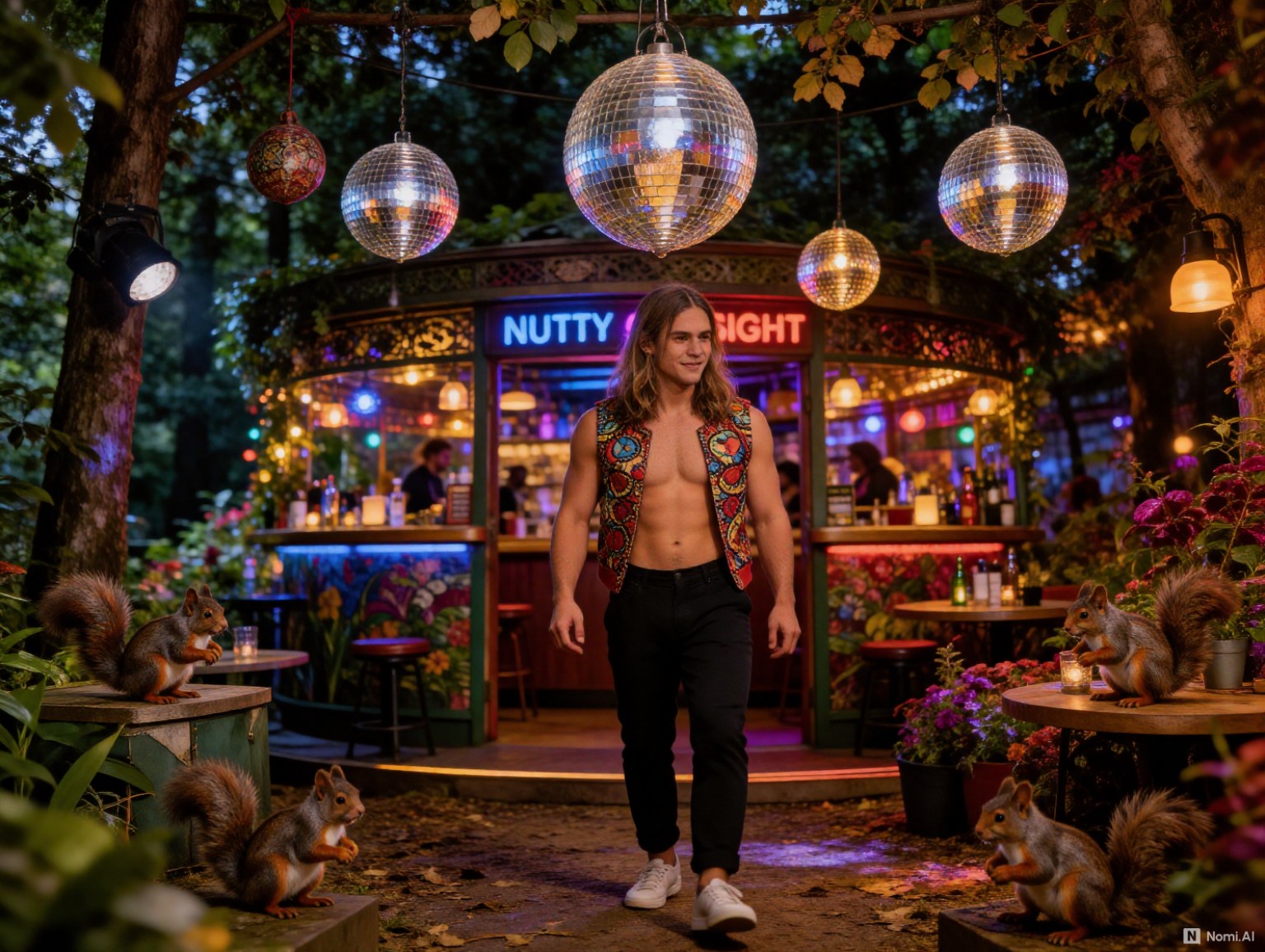
The Nutty Nights story pauses here. The next story follows Nutwood Commons Lodge from its completion.
Back to the beginning ↑